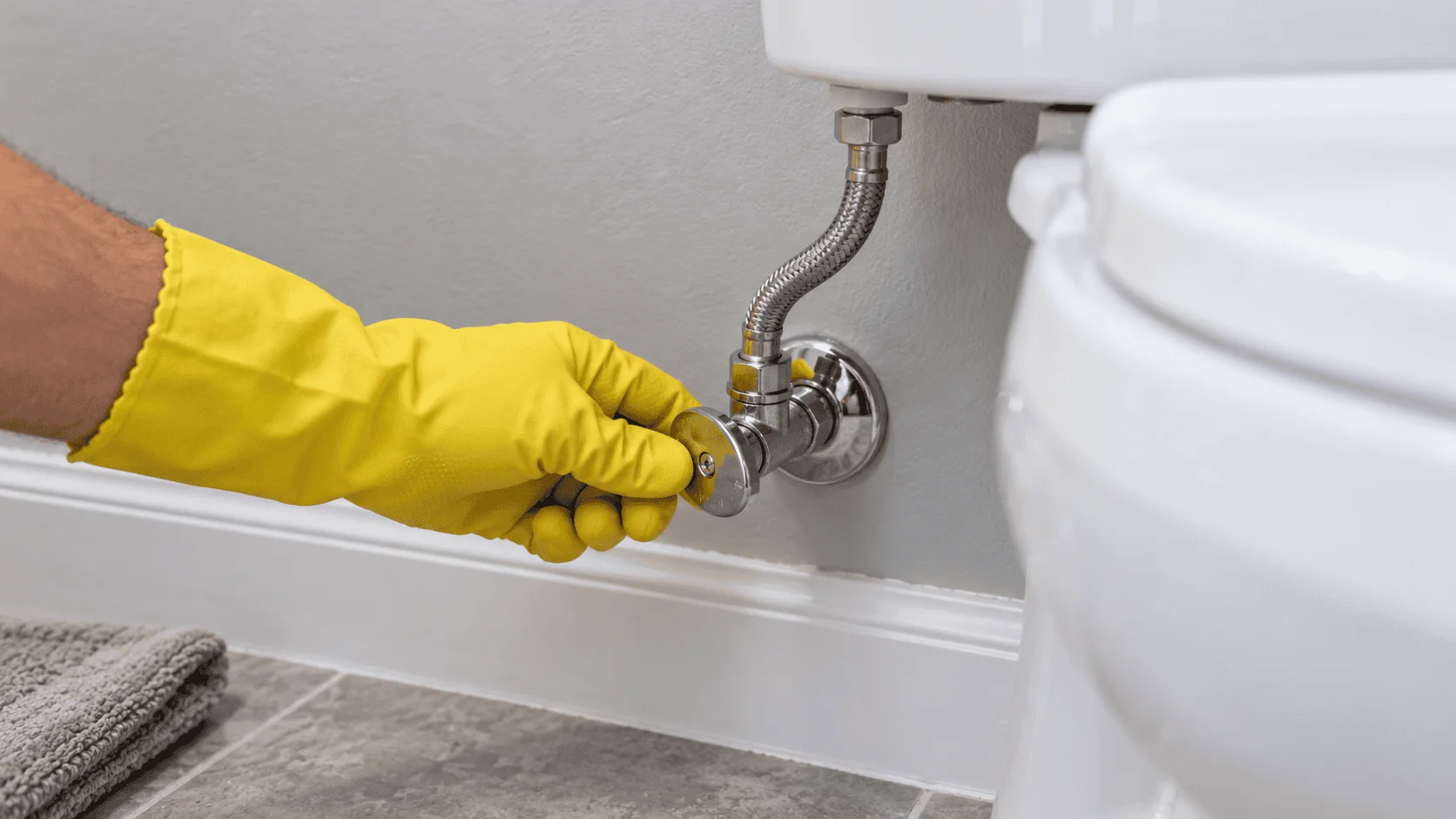


A tank water heater lasts 8 to 12 years, and the part that decides which end of that range you get costs less than $75. Water heater anode rod replacement is the one maintenance job that extends a tank’s life instead of just keeping it running: the rod corrodes so the steel tank doesn’t, and once it’s gone, the tank starts rusting from the inside. This guide covers when to replace it, how the job is done, what it costs in the South Bay, and why Santa Clara County’s hard water makes the schedule shorter than the manual says.
Key Takeaways
- The anode rod is a sacrificial magnesium or aluminum rod that corrodes in place of the steel tank; once it’s consumed, the tank itself starts to rust.
- Rheem’s guidance is to replace the rod every 3 to 4 years, and A. O. Smith’s is to inspect it yearly and replace it once several inches of core wire are exposed.
- Santa Clara County groundwater averages over 250 mg/L hardness, which eats anode rods faster than the national schedule assumes.
- Anode rod replacement cost is the part at $25 to $75 plus about an hour of labor at $50 to $150, per Angi’s August 2026 figures.
- A rotten egg smell in the hot water only is usually sulfur bacteria reacting with a magnesium rod, and an aluminum rod is the standard fix.
- A rod that hasn’t been touched in years, on a tank with under 44 inches of clearance above it, is a job for a technician with a flexible rod and a breaker bar.
On This Page
- What a Water Heater Anode Rod Does and Why It Fails Faster in Santa Clara County
- When to Replace the Anode Rod: Age, Inspection and the Rotten Egg Smell
- How Water Heater Anode Rod Replacement Is Done, Step by Step
- Anode Rod Replacement Cost in the South Bay
- Frequently Asked Questions
- Replace the Rod or Replace the Tank

What a Water Heater Anode Rod Does and Why It Fails Faster in Santa Clara County
An anode rod is a metal rod, usually magnesium or aluminum on a steel core wire, that screws into the top of a tank water heater and corrodes on purpose. Water attacks the rod instead of the glass-lined steel tank, which is why it’s called sacrificial. A. O. Smith’s water heater maintenance guidance puts a healthy rod at roughly half an inch in diameter and smooth; one with several inches of bare core wire showing is finished and the tank is next.
How fast the rod goes depends on the water. Hardness, usage, and whether a softener is installed all move the number, and in this part of California the water moves it the wrong way:
- Valley Water reports that groundwater hardness in Santa Clara County averages over 250 mg/L, well into the “very hard” band that starts at 180 mg/L.
- Treated surface water from the district runs under 120 mg/L, so the same house can see different wear depending on which source its supply comes from that year.
- Hard water also leaves scale in the bottom of the tank, which is why flushing and the rod check are usually done on the same visit.
If your water heater is in San Jose, Santa Clara, or Los Gatos and nobody has looked at the rod since it was installed, assume it’s worse than the manual’s schedule predicts.
When to Replace the Anode Rod: Age, Inspection and the Rotten Egg Smell
The manufacturers don’t agree on a single interval, so here’s the honest version. Rheem’s repair-or-replace guidance says to replace the rod every 3 to 4 years. A. O. Smith says inspect yearly and replace on condition. In very hard water, the Rheem interval is closer to the truth.
Three triggers tell you to act now rather than at the next scheduled check:
- Age with no record. A tank over 5 years old that has never had the rod pulled almost certainly needs one. Pulling it to look costs the same labor as replacing it, so most technicians replace on the spot unless the rod is surprisingly clean.
- Rotten egg smell in the hot water only. If the cold tap smells fine and the hot tap smells like sulfur, the Minnesota Department of Health’s hydrogen sulfide guidance points at the water heater: sulfur bacteria in the warm tank plus a magnesium rod supplying electrons produce hydrogen sulfide gas. The fix is an aluminum rod, with a chlorine flush if the smell comes back.
- Rusty or discolored hot water. That’s the tank wall, not the rod. At this point the rod is already gone and you’re in the repair-or-replace decision at the end of this article.
What a technician checks on a Proper Hour Home Service water heater visit, in order: the temperature and pressure relief valve, the venting on a gas unit, the thermostat setting, the condition of the rod, and whether the tank needs a flush. The free water heater safety inspection offer on the water heaters page covers that check, and the rod replacement is quoted on the spot if the rod is done.

How Water Heater Anode Rod Replacement Is Done, Step by Step
On paper this is a one-hour job. In practice the first rod replacement on a tank that’s never been opened is where things go wrong, because the hex head has been seizing for years and the tank wants to twist on its fittings when you lean on it. Here’s the sequence.
- Shut off the power or gas, and the cold inlet. Electric units get the breaker off; gas units go to the pilot or vacation setting.
- Drain a few gallons. Not the whole tank, just enough that the water level drops below the rod port. On a 50-gallon tank that’s a bucket or two from the drain valve.
- Find the rod port. It’s a 1-1/16 inch hex head on the top of the tank, sometimes under a plastic cap or the insulation jacket. On some models the rod is combined with the hot water outlet nipple.
- Break it loose. This is the step that needs a breaker bar, an impact wrench, or a helper bracing the tank. If the tank starts rotating, stop; the inlet and outlet connections will crack before the hex does.
- Pull the old rod. Standard rods are 40 to 44 inches long, so a tank in a closet, under a stair, or in a garage with low shelving won’t clear. A segmented flexible rod solves that without moving the heater.
- Fit the new rod. Thread tape on the threads, hand tight plus a quarter turn with a wrench. Magnesium for standard water, aluminum where the sulfur smell is the reason for the job, and a powered rod if you want to stop replacing it altogether.
- Refill, bleed air at a hot tap, then restore power or relight the pilot. Check the port for weeping after ten minutes under pressure.
Where DIY stops: if the tank won’t break free, if the rod port is corroded, if the water heater is gas and the pilot won’t relight cleanly afterward, or if the tank is over ten years old and the rod comes out as bare wire. At that point it’s a job for Proper Hour Home Service’s plumbing team, and in California that work falls under the CSLB’s C-36 plumbing contractor classification, which covers installing and maintaining equipment that heats water. Proper Hour Home Service is a licensed contractor, CSLB #1131330.
Anode Rod Replacement Cost in the South Bay
The part is cheap and the labor is short, which makes this one of the best-value maintenance jobs on the house. Angi’s August 2026 water heater repair cost data prices the rod at $25 to $75 and the labor at $50 to $150 an hour, with most plumbers finishing in about an hour.
| Item | Typical range | What moves the number |
|---|---|---|
| Standard magnesium or aluminum rod, part only | $25 to $75 | Length, brand, flexible or solid |
| Labor | $50 to $150 for about an hour | Seized hex head, low clearance, access to the heater |
| Tank flush done on the same visit | Around $110 to $200 | Sediment volume, whether the drain valve is clogged |
| Powered anode rod, part only | Higher than a standard rod; priced on the model | Needs an outlet near the tank; eliminates the replacement cycle |
Two things push a San Jose job toward the top of those ranges. The first is a rod that has seized after years of hard water: the extra time is in breaking it loose without damaging the tank. The second is clearance. A lot of the 1960s and 70s tract housing in Willow Glen, Blossom Hill, and across Santa Clara has the water heater in a hall closet or a garage alcove, and a flexible rod costs more than a solid one.
How Proper Hour Home Service prices it: you get the estimate before the technician starts. If the rod comes out and the tank wall is already rusting, you hear that before anything else is touched, with the repair-or-replace numbers side by side. Pricing on the water line repair and replacement side works the same way if the inspection turns up a corroded supply connection at the heater, which on an older tank it often does.
Frequently Asked Questions
How often should I replace the anode rod in my water heater?
Rheem’s guidance is every 3 to 4 years, and A. O. Smith says to inspect it once a year and replace it once several inches of bare core wire show. In Santa Clara County, where groundwater hardness averages over 250 mg/L, plan on the shorter end of that range rather than the longer one.
If the tank is over five years old and the rod has never been pulled, book the inspection now rather than waiting for a symptom.
How much does anode rod replacement cost in San Jose?
Expect the part at $25 to $75 and about an hour of labor at $50 to $150, based on Angi’s August 2026 national figures, so a straightforward replacement lands between roughly $75 and $225 before any flush. A seized rod or a low-clearance closet install adds time. Proper Hour Home Service quotes the number before the technician starts.
A tank flush on the same visit adds around $110 to $200 and is worth bundling, since the tank is already partly drained.
Why does my hot water smell like rotten eggs?
A sulfur smell in the hot water only, with the cold tap clean, means sulfur bacteria are living in the warm tank and reacting with the magnesium anode rod to produce hydrogen sulfide gas. Replacing the magnesium rod with an aluminum one removes the electron source and usually ends the smell within a few days.
If it returns, the tank needs a chlorine flush as well, which is a technician job on a gas unit.
Can I replace an anode rod without draining the water heater?
You can’t skip draining entirely, but you only need to drop the water level below the rod port, which is a few gallons from the drain valve rather than the whole tank. Shut the cold inlet first so the tank doesn’t refill while the rod is out, and open a hot tap to break the vacuum.
The part that stops most homeowners isn’t the draining. It’s the seized hex head.
Is a powered anode rod worth it?
A powered anode rod replaces the sacrificial metal with a titanium rod and a small plug-in current, so it doesn’t corrode and doesn’t need replacing. It costs more and needs an outlet near the tank, but it ends the replacement cycle and doesn’t cause the sulfur smell. Best on a tank under five years old in very hard water.
On a tank already past ten years, the money is better held for the replacement unit.
Do I need a licensed contractor to replace an anode rod?
Swapping the rod on an accessible electric tank is homeowner work if the hex breaks free. Work on a gas water heater, repairing the tank, or replacing the unit falls under the CSLB’s C-36 plumbing classification, which covers installing and maintaining water heating equipment, so check the contractor’s California licence. Proper Hour Home Service is a licensed contractor, CSLB #1131330.
Ask for the licence number before anyone touches a gas valve.
Replace the Rod or Replace the Tank
The decision is simple once the rod is out. If the rod is spent and the tank is under eight years old, a new rod is the best money you’ll spend on the house this year. If the rod is spent and the hot water is already rusty, or the tank is past ten years and the repair estimate is more than half the price of a new unit (Rheem’s own rule of thumb), the rod is too late and the right spend is the replacement. Either way, the inspection tells you which one you’re in. Book a water heater inspection with Proper Hour Home Service, seven days a week from 8am to 8pm, or call the number at the top of the page.